


 Locations

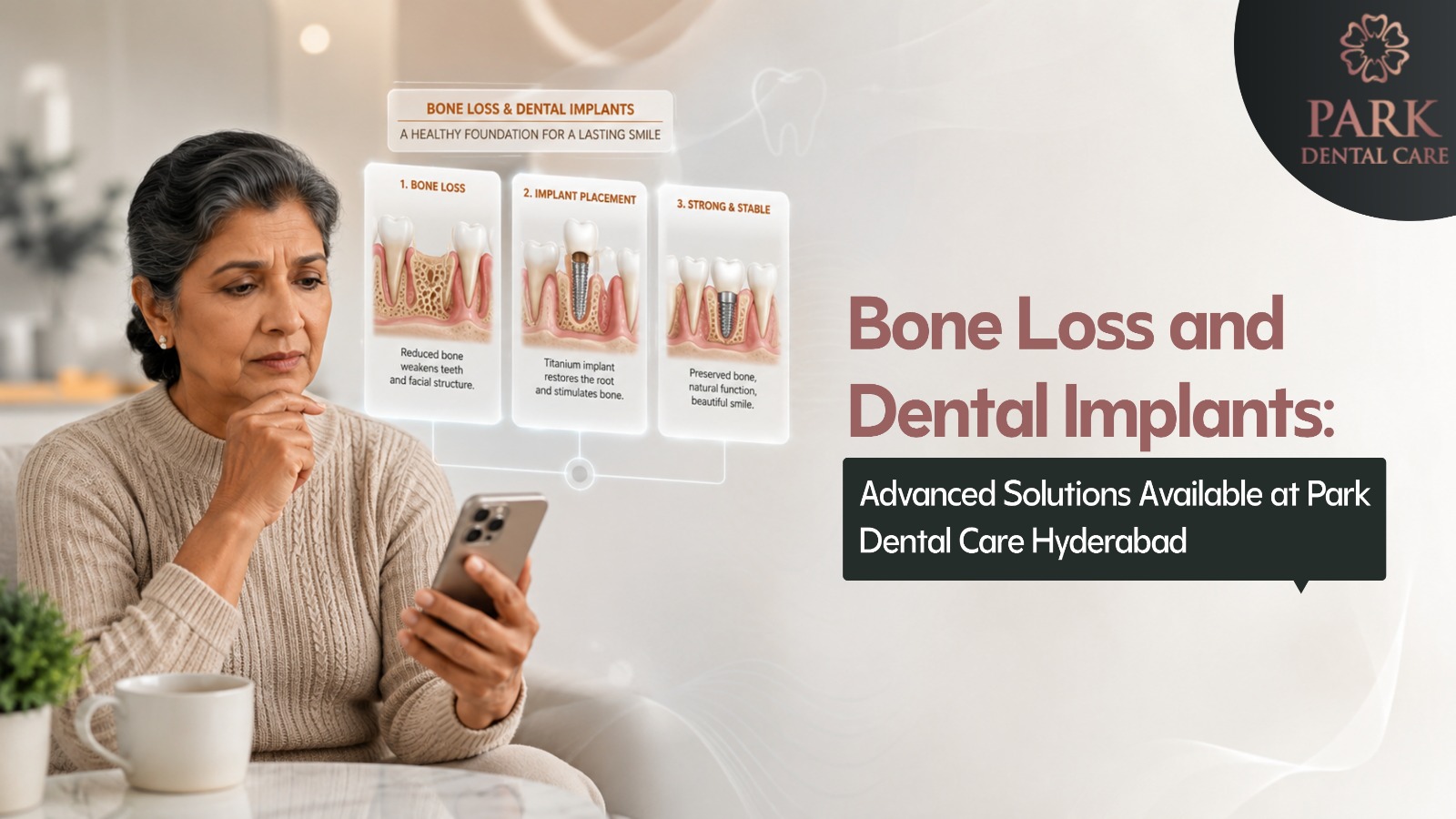
Bone Loss and Dental Implants: Advanced Solutions Available at Park Dental Care Hyderabad
Did You Know Missing a Tooth Can Lead to Bone Loss? Many people assume that losing a tooth is primarily a cosmetic concern. However, the effects of tooth loss extend far beyond appearance. When a tooth is missing for an extended period, the jawbone beneath it begins to deteriorate. This process, known as bone loss, can affect facial appearance, oral health, and the ability to receive dental restorations in the future. Fortunately, modern dentistry offers advanced solutions that make it possible for patients with bone loss to regain their confidence and functionality through dental implants.
If you are considering dental implants in Hyderabad, understanding the relationship between bone loss and implant treatment is essential. At Park Dental Care, patients benefit from advanced diagnostic tools, experienced implant specialists, and cutting-edge procedures designed to address even complex cases involving significant bone loss.
Understanding Bone Loss After Tooth Loss
Your jawbone requires regular stimulation from tooth roots to maintain its strength and density. Every time you chew, the tooth roots transmit pressure into the jawbone, encouraging healthy bone regeneration.
When a tooth is lost:
- The stimulation to the jawbone stops.
- Bone cells begin to break down.
- The jawbone gradually shrinks in volume and density.
- Surrounding teeth may shift.
- Facial appearance may change over time.
Studies show that significant bone loss can occur within the first year following tooth extraction, making early intervention extremely important.
What Causes Bone Loss in the Jaw?
The jawbone requires constant stimulation from tooth roots to maintain its density and volume. When a tooth is lost or extracted, the surrounding bone no longer receives the stimulation it needs and gradually begins to deteriorate.
Several factors contribute to jawbone loss, including:
1. Missing TeethThe most common cause of bone loss is untreated tooth loss. Within the first year after losing a tooth, a significant amount of bone volume can disappear.
2. Gum DiseaseAdvanced periodontal disease destroys the supporting structures around the teeth, including the bone. If left untreated, it can lead to tooth loss and extensive bone deterioration.
3. Dental TraumaAccidents or injuries that result in tooth loss can trigger rapid bone resorption if replacement treatment is delayed.
4. Denture UseTraditional dentures rest on the gums and do not stimulate the jawbone like natural teeth. Over time, this can accelerate bone loss.
5. Infections and Medical ConditionsCertain infections, osteoporosis, and systemic health conditions may contribute to reduced bone density in the jaw.
Why Is Bone Important for Dental Implants?
Dental implants function as artificial tooth roots that are surgically placed into the jawbone. Their success depends largely on a process called osseointegration, where the implant fuses with the surrounding bone.
For successful implantation, adequate bone height, width, and density are essential. When significant bone loss occurs, placing an implant becomes more challenging because there may not be enough healthy bone to support it securely.
This is where advanced dental solutions come into play. Modern implant dentistry offers several procedures that can rebuild bone and create a stable foundation for implants.
Signs That You May Have Jawbone Loss
Many patients are unaware they have bone loss until they visit a dentist for implant treatment. Common signs include:
- Sunken facial appearance
- Premature facial aging
- Difficulty wearing dentures
- Shifting of remaining teeth
- Changes in bite alignment
- Loose teeth due to periodontal disease
- Reduced jawbone volume visible on dental scans
At Park Dental Care, advanced diagnostic imaging such as 3D CBCT scans helps accurately evaluate bone quality and quantity before treatment planning.
Can You Still Get Dental Implants with Bone Loss?
Absolutely, modern implant dentistry offers multiple advanced solutions for patients with insufficient bone volume.
At Park Dental Care, every patient undergoes comprehensive digital evaluation before treatment planning. Using advanced imaging and 3D diagnostics, our specialists determine the most suitable approach for successful implant placement.
Whether you need a single implant or full-mouth rehabilitation, customized solutions are designed to restore your smile safely and effectively.
Advanced Bone Regeneration Solutions at Park Dental Care
1. Bone Grafting
Bone grafting is one of the most common and effective procedures used to rebuild jawbone volume.
During this treatment, specialized bone graft material is placed in the deficient area, encouraging the body to regenerate new bone over time.
Benefits include:
- Increased bone density
- Stronger implant foundation
- Better long-term implant success
- Improved facial structure
Patients who were previously told they were not candidates for implants often become eligible after successful bone grafting.
2. Sinus Lift Surgery
Patients missing upper back teeth often experience bone loss near the maxillary sinus. In such cases, a sinus lift procedure may be recommended.
During this treatment, the sinus membrane is gently elevated, and bone graft material is added to increase bone height.
This procedure allows patients who were previously considered unsuitable candidates to successfully receive dental implants.
3. Ridge Augmentation
When the jawbone becomes too narrow after tooth loss, ridge augmentation can restore the natural contour of the jaw.
This procedure rebuilds the width and shape of the alveolar ridge, creating adequate space for implant placement.
4. Guided Bone Regeneration
Guided Bone Regeneration (GBR) is a sophisticated technique that uses specialized membranes to encourage new bone growth while preventing soft tissue interference.
This approach improves bone regeneration outcomes and enhances implant success rates.
5. All-on-4 Dental Implants
Patients with multiple missing teeth and moderate bone loss can benefit from the revolutionary All-on-4 technique.
Instead of placing an implant for every missing tooth, four strategically positioned implants support a full arch of prosthetic teeth.
Key benefits:
- Minimal need for bone grafting
- Faster recovery
- Fixed teeth in fewer appointments
- Natural appearance and function
This solution is ideal for patients seeking a permanent alternative to removable dentures.
6. Immediate Implant Solutions
In select cases, advanced planning and digital technology allow implants to be placed immediately after tooth extraction, reducing the risk of future bone loss.
At Park Dental Care, careful case evaluation helps determine whether immediate implants are suitable for a particular patient.
Advanced Technology at Park Dental Care
One of the reasons patients trust Park Dental Care for dental implants in Hyderabad is its commitment to advanced technology and precision dentistry.
The clinic utilizes:
1. 3D CBCT Imaging
Three-dimensional imaging provides a detailed view of the jawbone, nerves, and surrounding structures.
This allows dentists to:
- Measure bone density accurately
- Identify anatomical limitations
- Plan precise implant placement
- Reduce surgical risks
2. Digital Implant Planning
Computer-guided treatment planning helps create customized implant solutions for each patient.
Benefits include:
- Greater precision
- Reduced treatment time
- Improved implant positioning
- Enhanced long-term outcomes
3. Guided Implant Surgery
Using surgical guides created through digital planning, implants can be placed with exceptional accuracy.
This minimally invasive approach often results in:
- Less discomfort
- Faster healing
- Reduced swelling
- Higher success rates
4. High-Quality Implant Systems
The clinic uses internationally recognized implant systems designed for durability and long-term success.
Benefits of Choosing Dental Implants Despite Bone Loss
With modern regenerative procedures, patients no longer need to settle for removable dentures or bridges. Dental implants offer numerous advantages.
1. Restored Chewing AbilityImplants function like natural teeth, allowing patients to enjoy a wider variety of foods without discomfort.
2. Preservation of Bone StructureUnlike traditional tooth replacement options, implants stimulate the jawbone and help prevent further bone loss.
3. Improved Facial AppearanceBone loss can cause facial collapse and premature aging. Implants help maintain facial contours and support overall facial aesthetics.
4. Long-Term DurabilityWith proper care, dental implants can last for decades, making them a highly reliable investment in oral health.
5. Enhanced ConfidenceA complete and healthy smile can significantly improve self-esteem and quality of life.
What to Expect During the Implant Process at Park Dental Care
Step 1: Initial Consultation
The process begins with a comprehensive dental examination, including:
- Oral health assessment
- Digital X-rays
- 3D CBCT imaging
- Bone density evaluation
Step 2: Personalized Treatment Planning
Based on diagnostic findings, the dental team develops a customized treatment plan that may include bone grafting, sinus lift procedures, or direct implant placement.
Step 3: Bone Regeneration Phase
If bone augmentation is necessary, the regeneration procedure is performed first. Healing may take several months depending on the extent of reconstruction.
Step 4: Implant Placement
The titanium implant is carefully positioned into the jawbone using advanced surgical techniques.
Step 5: Osseointegration
During the healing phase, the implant fuses with the surrounding bone to create a stable foundation.
Step 6: Final Restoration
A custom-made crown, bridge, or denture is attached to the implant, restoring both function and aesthetics.
How Successful Are Dental Implants in Patients with Bone Loss?
Advancements in implant dentistry and bone regeneration techniques, success rates remain exceptionally high.
Studies consistently show implant success rates exceeding 95% when proper planning, bone management, and maintenance protocols are followed.
The expertise of the dental team, quality of diagnostic evaluation, and adherence to post-treatment care all contribute to successful outcomes.
Recovery After Bone Grafting and Dental Implants
Recovery varies depending on the complexity of the procedure, but most patients experience only mild discomfort.
Typical recovery tips include:
- Follow prescribed medications
- Eat soft foods for a few days
- Maintain excellent oral hygiene
- Avoid smoking and alcohol
- Attend scheduled follow-up appointments
Bone grafts generally heal over a few months before implants are placed, although some procedures allow simultaneous implant placement.
Why Choose Park Dental Care for Dental Implants in Hyderabad?
When it comes to replacing missing teeth and managing bone loss, experience and technology make a significant difference.
Park Dental Care is committed to providing advanced implant solutions tailored to each patient's unique needs. The clinic combines modern diagnostic tools, evidence-based treatment protocols, and patient-focused care to deliver predictable and long-lasting results.
Patients benefit from:
- Comprehensive implant consultations
- Advanced 3D imaging technology
- Bone grafting and regenerative procedures
- Precision-guided implant placement
- Personalized treatment planning
- Focus on comfort and long-term success
Whether you have recently lost a tooth or have been told you lack sufficient bone for implants, the team at Park Dental Care can evaluate your condition and recommend suitable solutions.