


 Locations

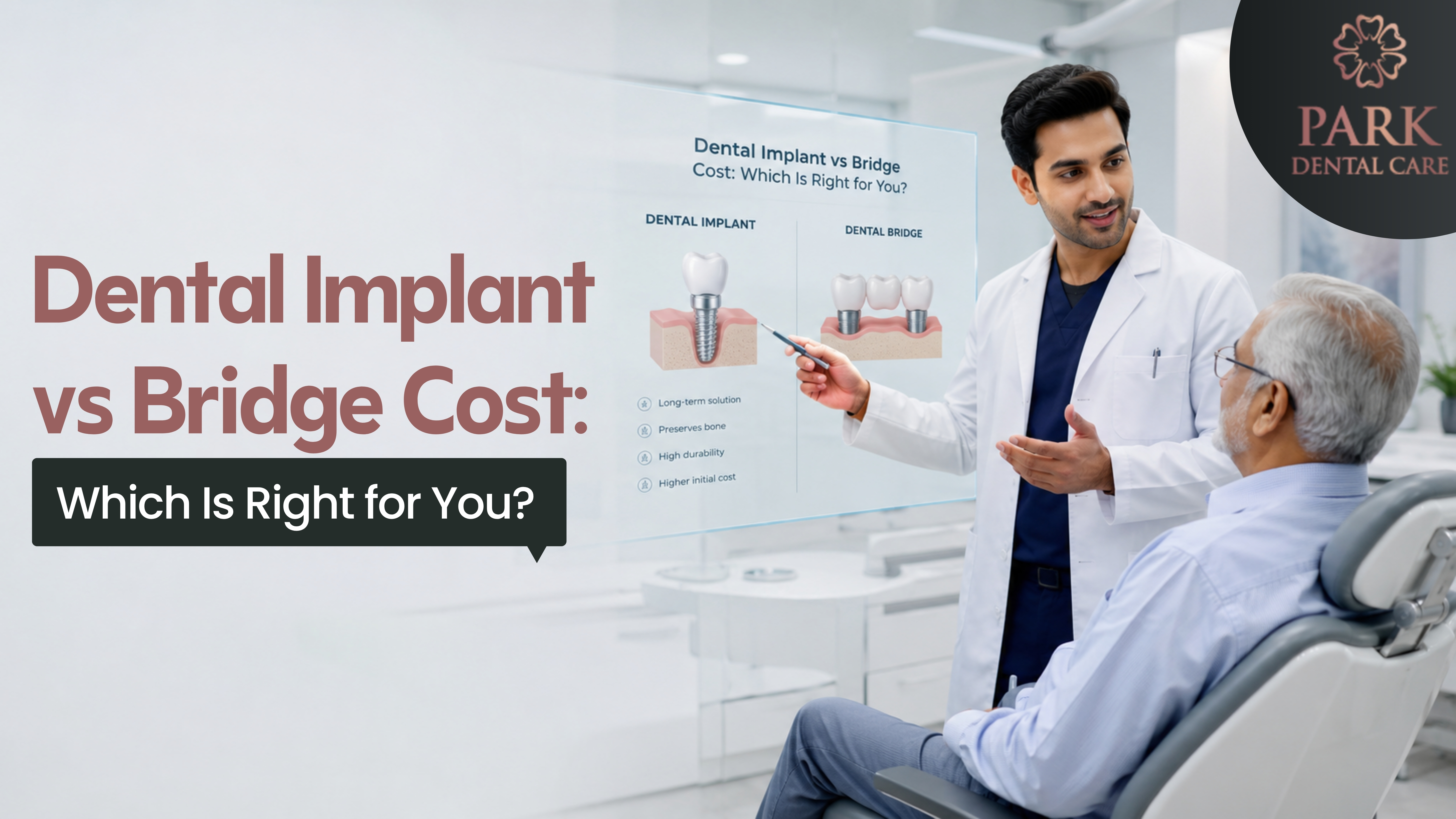
Dental Implant vs Bridge Cost: Which Is Right for You?
Quick answer: a dental bridge typically costs less upfront (roughly ₹15,000–₹40,000 per unit in Hyderabad) than a dental implant (roughly ₹35,000–₹80,000 all-inclusive for a single tooth), but a bridge requires reducing the two healthy teeth on either side of the gap and generally needs replacement every 10–15 years, while a well-maintained implant is designed to last 15–25 years or longer.
The lower upfront cost of a bridge often narrows or reverses over the long term once replacement and the condition of the supporting teeth are factored in.
Implant vs Bridge: Cost Comparison
| Factor | Dental Bridge | Dental Implant |
|---|---|---|
| Typical upfront cost (Hyderabad) | ₹15,000 – ₹40,000 per unit | ₹35,000 – ₹80,000 (single tooth, all-inclusive) |
| Effect on neighbouring teeth | Requires reducing two healthy teeth | No alteration of adjacent teeth |
| Typical lifespan | 10–15 years, then replacement | 15–25 years or longer |
| Bone health | Does not prevent jawbone loss under the gap | Preserves jawbone through normal chewing function |
| Procedure | No surgery; fitted over 2–3 visits | Minor surgical placement, healing period, then crown |
Why a Bridge Costs Less Upfront?
A bridge doesn't require surgery, implant hardware, or a healing period it's fitted directly onto the two teeth adjacent to the gap over a small number of visits, which keeps the initial cost lower. This is also why it's sometimes searched for as a lower-cost 'dental transplant cost' alternative, though the correct terms are bridge and implant respectively dental transplants (moving a natural tooth from one site to another) are a distinct and far less common procedure.
Why an Implant Often Costs Less Over Time?
A bridge typically needs replacement every 10 to 15 years as the cement seal wears or the supporting teeth develop decay beneath the crown an implant, once integrated, doesn't carry that recurring replacement cost. Factored over 20 to 25 years, the two options often land closer together in total cost than the initial price tags suggest, and in many cases the implant works out more economical.
What a Bridge Costs You Beyond Money?
The less visible cost of a bridge is to the two teeth supporting it both need to be reduced (filed down) to accept the crowns that anchor the bridge in place, even if they were previously healthy. This is irreversible, and those teeth carry a higher lifetime risk of decay or eventual root canal treatment as a result. An implant leaves neighbouring teeth completely untouched.
Which Should You Choose?
- Choose a bridge if you want the lower upfront cost, don't want surgery, and the teeth on either side of the gap already have large fillings or crowns (meaning less additional loss from being reshaped).
- Choose an implant if you want to preserve healthy neighbouring teeth, are planning for the longest possible lifespan, and are comfortable with a minor surgical procedure and a multi-month treatment timeline.