


 Locations


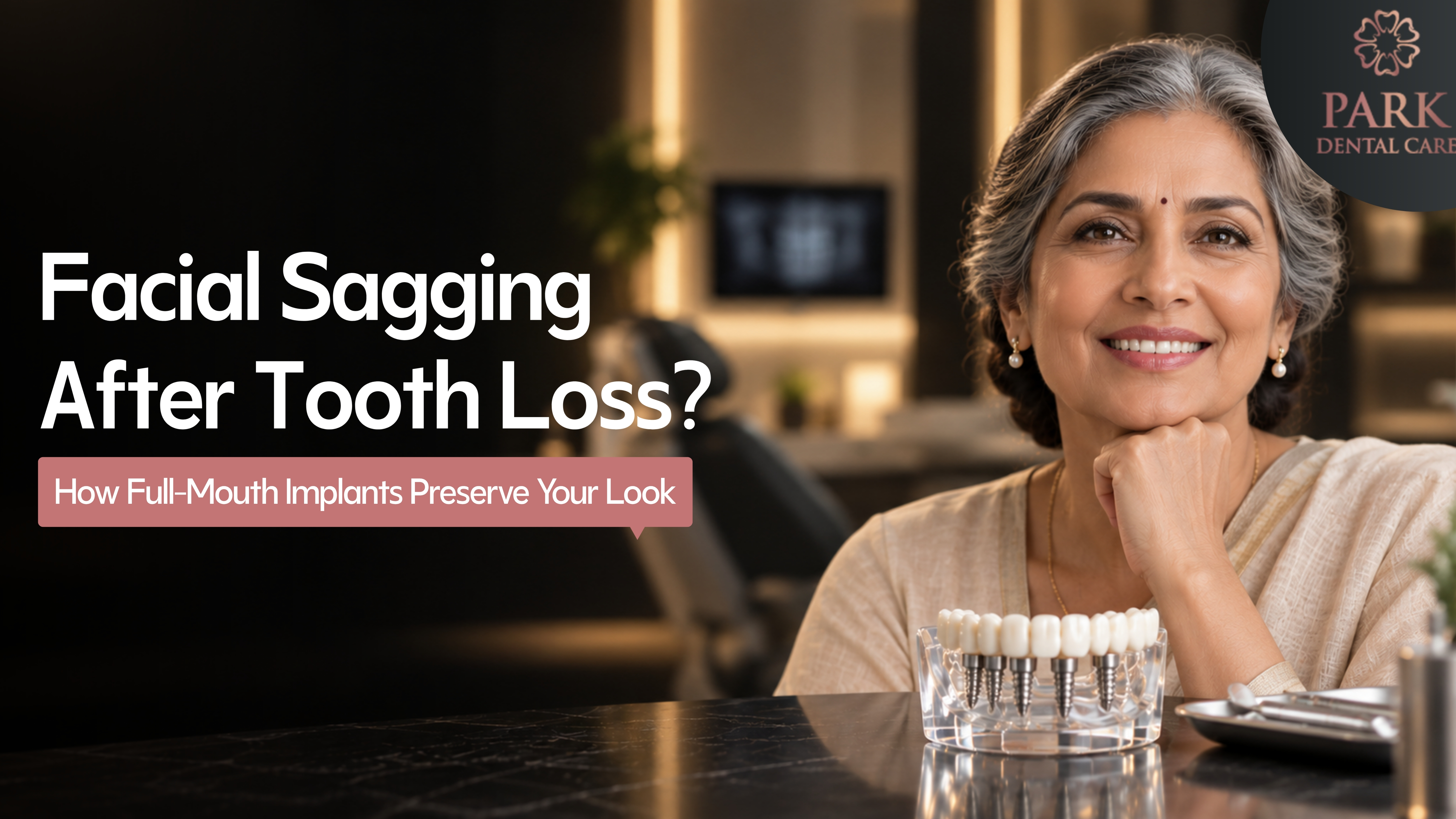
Facial Sagging After Tooth Loss? How Full-Mouth Implants Preserve Your Look
Tooth loss can affect more than your ability to chew or speak comfortably. When several teeth or an entire set of teeth are missing, changes in the jawbone and facial support can gradually make your face appear sunken, older, or less defined. Many people notice thinner lips, deeper lines around the mouth, or a reduction in the fullness of their cheeks.
The good news is that modern dental treatments can help restore both oral function and facial support. Full-mouth dental implants in Hyderabad offer a long-term tooth replacement option that can help preserve facial structure while restoring a natural-looking smile.
At Park Dental Care, full-mouth implant treatment is planned according to each patient's dental condition, jawbone health, and aesthetic goals. Understanding the connection between tooth loss and facial sagging can help you make an informed decision about restoring your smile.
Why Does Facial Sagging Happen After Tooth Loss?
Your teeth do more than help you bite and chew. They also support the surrounding gums, lips, and facial tissues. When multiple teeth are lost, the underlying jawbone can gradually shrink because it no longer receives the stimulation normally provided by tooth roots during chewing.
This process, known as bone resorption, can affect the foundation that supports your facial appearance.
Here are some common changes associated with extensive tooth loss:
- Sunken cheeks: Reduced jawbone volume and changes in oral support can make the cheeks appear less full.
- Thinner-looking lips: Missing front teeth can reduce the support available to the lips, affecting their shape and position.
- Deeper facial folds: Changes in dental support may make lines around the mouth and nose appear more pronounced.
- A less defined jawline: Bone loss and changes in the lower face can alter facial contours.
- Changes in facial proportions: When teeth are missing, the relationship between the upper and lower jaws may change, particularly if the bite and denture support are inadequate.
It is important to remember that facial sagging is not caused by tooth loss alone. Ageing, genetics, weight changes, and natural skin elasticity also influence facial appearance. However, replacing missing teeth and restoring appropriate oral support may help address some of the changes associated with tooth loss.
How Do Full-Mouth Dental Implants Help Preserve Facial Appearance?
Full-mouth dental implants are designed to replace multiple missing teeth using implants placed in the jawbone to support fixed replacement teeth or, in selected cases, implant-supported removable prostheses.
Unlike conventional dentures, dental implants replace the function of tooth roots by transferring chewing forces to the surrounding bone. This stimulation can help preserve bone around the implants, although it cannot prevent bone loss in every area of the jaw.
Here is how full-mouth implant treatment may contribute to a more natural-looking appearance.
1. Helps Maintain Jawbone Structure
One of the most important benefits of dental implants is their ability to function as artificial tooth roots. After tooth loss, the jawbone in the affected area may gradually lose volume.
Implants transfer functional forces to the bone around them, helping maintain bone in those specific areas. This can support the underlying structure needed for stable tooth replacement.
However, implants do not automatically restore bone that has already been lost. Depending on your condition, bone grafting or other preparatory procedures may be recommended before implant placement.
2. Restores Support for Your Lips and Cheeks
Your teeth contribute to the natural contours of your lower face. When several teeth are missing, the lips may lose support, and the area around the mouth can appear less full.
Well-designed replacement teeth can help restore this support by recreating appropriate tooth position, shape, and bite relationships. Full-mouth implant-supported teeth may therefore improve facial balance and create a more natural smile.
The outcome depends on the amount of existing bone, the position of the implants, and the design of the final teeth. Dental implants cannot reverse every age-related facial change, but restoring lost dental support can make a meaningful difference for suitable patients.
3. Helps Restore Facial Height and Bite Function
When many teeth are missing or severely worn, the way the upper and lower jaws meet may change. In some cases, this affects the lower third of the face and makes the mouth appear less supported.
A carefully planned full-mouth rehabilitation can help establish a functional bite and appropriate tooth proportions. This may improve lip support and the appearance of the lower face.
The goal is not simply to make teeth look attractive. It is to restore a comfortable, stable bite while creating a smile that suits your facial features.
4. Provides a Stable Alternative to Conventional Dentures
Traditional dentures can be an effective solution for many patients. However, some people experience slipping, movement, discomfort, or difficulty chewing, especially as the jawbone changes over time.
Implant-supported teeth are anchored by dental implants, which can improve stability and chewing confidence. Depending on the treatment plan, the replacement teeth may be fixed or removable.
Greater stability can make everyday activities such as eating, speaking, and smiling feel more comfortable. It can also reduce the need to rely on denture adhesives in some cases.
5. Supports a Natural-Looking Smile
A successful full-mouth restoration considers more than the number of teeth being replaced. Tooth colour, shape, size, gum appearance, bite alignment, and facial proportions all influence the final result.
At Park Dental Care, patients considering full-mouth rehabilitation can discuss their functional needs and smile goals with a dental professional. A personalised treatment plan helps determine the most suitable approach for achieving a balanced, natural-looking result.
Who Can Benefit from Full-Mouth Dental Implants?
You may be a candidate for full-mouth dental implants if you:
- Have lost most or all of your teeth in one or both jaws.
- Experience facial changes associated with extensive tooth loss.
- Have loose or uncomfortable dentures.
- Find it difficult to chew because of missing or failing teeth.
- Want a more stable alternative to conventional dentures.
- Have sufficient jawbone support or are suitable for additional procedures to improve bone volume.
A detailed dental examination is essential before treatment. Your dentist will assess your gum health, bone density, bite, medical history, and oral hygiene habits. Conditions such as uncontrolled diabetes and smoking may affect healing and need to be addressed during treatment planning.
Even if you have experienced jawbone loss, you may still qualify for implants. Depending on the situation, bone grafting or specialised implant techniques may be considered.
What Is the Full-Mouth Dental Implant Procedure Like?
The treatment process usually involves several stages.
Step 1: Consultation and examination
Your dentist evaluates your missing teeth, jawbone condition, bite, and facial support. Dental X-rays or 3D imaging may be recommended to assess the available bone.
Step 2: Personalised treatment planning
The dentist determines the appropriate implant positions, the number of implants required, and the type of replacement teeth that will best suit your needs.
Step 3: Implant placement
The implants are surgically placed into the jawbone under appropriate anaesthesia. Temporary teeth may be provided during the same appointment in selected cases, depending on stability and clinical suitability.
Step 4: Healing and integration
Over the following weeks or months, the implants integrate with the jawbone. Your dentist will monitor healing and provide instructions about diet and oral hygiene.
Step 5: Final restoration
Once the implants are sufficiently stable, the final replacement teeth are fitted and adjusted for comfort, appearance, and bite.
The overall timeline varies depending on bone quality, additional procedures, and individual healing.
Full-Mouth Dental Implants vs. Traditional Dentures
Both traditional dentures and implant-supported restorations can replace missing teeth. However, they differ in how they support the mouth and function during daily activities.
| Feature | Traditional Dentures | Full-Mouth Dental Implants |
|---|---|---|
| Stability | May shift during eating or speaking | Anchored to implants |
| Jawbone support | Do not replace tooth roots or provide the same bone stimulation | Help stimulate the bone around the implants |
| Facial support | Depends on denture design and fit | Can restore dental support when carefully planned |
| Maintenance | Requires removal and regular cleaning | Requires daily cleaning and professional maintenance |
| Treatment | Generally does not require implant surgery | Requires surgical placement and healing |
The right choice depends on your oral health, budget, medical history, and preferences. Some patients may also benefit from implant-supported removable dentures rather than a fixed restoration.
Why Choose Park Dental Care for Full-Mouth Dental Implants in Hyderabad?
Choosing the right dental team is an important part of successful full-mouth rehabilitation. Park Dental Care offers dental implant services in Hyderabad, with treatment planning that considers function, comfort, and smile aesthetics.
Dr. Manikya Shastri, a prosthodontist, oral implantologist, and dentofacial prosthetist, specialises in full-mouth rehabilitation and smile design.
The clinic's approach includes dental examination, digital diagnostic planning where indicated, and personalised recommendations based on the patient's oral condition. Patients can discuss suitable implant options, expected outcomes, treatment duration, and costs before proceeding.
If missing teeth have affected your smile, chewing ability, or facial appearance, a consultation can help determine whether implant-supported restoration is appropriate for you.