


 Locations

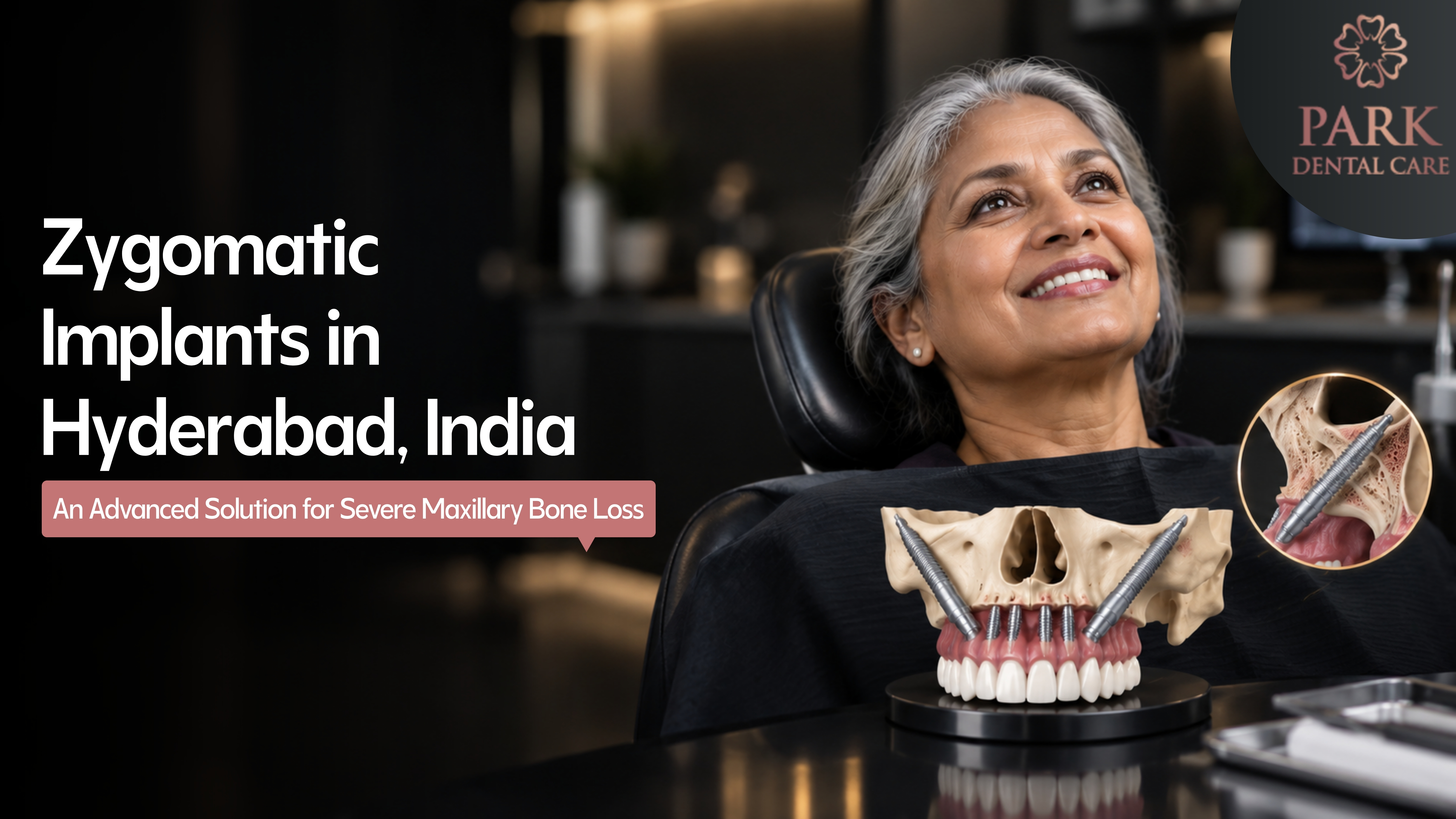
Zygomatic Implants in Hyderabad, India: An Advanced Solution for Severe Maxillary Bone Loss
Losing multiple teeth can affect more than your smile. It can make chewing difficult, change facial appearance, and reduce confidence in everyday life. For patients who have experienced significant upper jawbone loss, replacing missing teeth with conventional dental implants can be challenging. Fortunately, advanced implant dentistry offers an alternative known as zygomatic implants.
Zygomatic Implants in Hyderabad are an advanced treatment option for eligible patients who have severe bone loss in the upper jaw and may not have enough bone to support traditional dental implants. Instead of relying on the upper jawbone, these specialised implants anchor into the cheekbone, also called the zygomatic bone.
At Park Dental Care, patients can explore advanced dental implant solutions based on their oral health, bone condition, and individual treatment requirements. Understanding how zygomatic implants work, who may benefit from them, and what to expect during treatment can help patients make informed decisions about restoring their smiles.
What Are Zygomatic Implants?
Zygomatic implants are longer than conventional dental implants and are designed to provide support for replacement teeth when the upper jaw has insufficient bone volume.
Traditional dental implants are placed in the jawbone to support crowns, bridges, or other dental prostheses. However, severe bone loss may make this approach difficult without additional procedures, such as bone grafting or sinus augmentation.
Zygomatic implants use the cheekbone as an anchoring point because this bone may remain suitable for implant placement even when the upper jawbone has deteriorated significantly.
These implants are generally used in carefully selected cases and require specialised surgical planning and expertise.
What Causes Severe Maxillary Bone Loss?
The maxilla is the upper jawbone that supports the upper teeth. When teeth are missing for a prolonged period, the underlying bone can gradually shrink because it no longer receives normal stimulation from tooth roots.
Several factors can contribute to severe maxillary bone loss, including:
1. Long-Term Tooth Loss
When upper teeth have been missing for several years, the jawbone may gradually lose volume and density. This can make conventional implant placement more challenging.
2. Advanced Gum Disease
Periodontal disease can damage the tissues and bone supporting the teeth. In advanced cases, extensive bone loss may remain even after the affected teeth have been removed.
3. Previous Dental Implant Failure
Some patients experience implant failure because of infection, inadequate bone support, or other complications. Previous surgeries may also affect the amount of bone available for further implant placement.
4. Long-Term Denture Use
Removable dentures can restore basic chewing function, but they do not prevent the natural bone changes associated with tooth loss. Over time, significant bone resorption may make dentures less stable.
5. Anatomical Limitations
Some patients naturally have limited bone volume in the upper jaw or enlarged maxillary sinuses that restrict the space available for conventional implants.
Identifying the cause and extent of bone loss is an important first step in determining whether zygomatic implants are appropriate.
Who May Need Zygomatic Implants?
Zygomatic implants in Hyderabad may be considered for patients who have insufficient bone in the upper jaw to support conventional dental implants.
Potential candidates include:
- Patients with severe bone resorption in the upper jaw.
- Individuals who have lost most or all of their upper teeth.
- Patients who have experienced failure of previous conventional implants.
- Individuals for whom extensive bone grafting may be unsuitable or undesirable.
- Patients seeking fixed upper teeth when conventional implant placement is not feasible.
However, candidacy depends on several factors, including general health, oral hygiene, sinus health, bone anatomy, smoking habits, and the condition of the remaining teeth and gums.
A detailed clinical examination and three-dimensional imaging, usually with cone-beam computed tomography (CBCT), help the implant team evaluate the cheekbone, sinus anatomy, and proposed implant positions.
Benefits of Zygomatic Implants in Hyderabad
For appropriately selected patients, zygomatic implants may offer several important advantages.
1. Avoids Extensive Bone Grafting
One of the biggest advantages of Zygomatic Implants is that they typically eliminate the need for bone grafting. This significantly reduces treatment complexity, healing time, and overall discomfort.
2. Immediate Functionality
In many cases, patients can receive provisional fixed teeth shortly after implant placement. This allows individuals to enjoy improved aesthetics and functionality much sooner than with traditional implant procedures.
3. High Stability and Success Rates
The dense structure of the cheekbone offers exceptional implant stability. As a result, zygomatic implants are known for their predictable and long-lasting outcomes.
4. Suitable for Severe Bone Loss Cases
Patients who have been informed that they lack sufficient jawbone for conventional implants can often benefit greatly from this advanced solution.
5. Enhanced Quality of Life
By restoring chewing ability, speech clarity, and facial appearance, zygomatic implants help patients regain confidence and improve daily living.
How Is Zygomatic Implant Treatment Performed?
The treatment process involves detailed planning, specialised surgery, and follow-up care.
Step 1: Initial Consultation
The dentist reviews the patient's medical and dental history, examines the mouth, and discusses missing teeth, previous treatments, and expectations.
Step 2: Advanced Diagnostic Imaging
CBCT imaging helps assess the upper jawbone, cheekbone, maxillary sinuses, and surrounding anatomical structures. These findings are used to determine whether zygomatic implants are suitable and how they should be positioned.
Step 3: Personalised Treatment Planning
The implant team develops a plan based on bone anatomy, the number of implants required, the intended restoration, and the patient's overall health. The plan may involve zygomatic implants alone in selected configurations or a combination of zygomatic and conventional implants.
Step 4: Surgical Placement
The procedure is performed under an appropriate anaesthetic plan. The implants are carefully positioned to obtain support from the cheekbone while protecting nearby anatomical structures.
Because the procedure is technically demanding, it should be performed by a suitably trained and experienced surgical team.
Step 5: Fixed Teeth and Healing
Depending on implant stability and other clinical factors, a temporary fixed prosthesis may be provided early, or the team may recommend a healing period before loading the implants.
Regular follow-up appointments help monitor healing, implant stability, gum health, and the condition of the final restoration.
Zygomatic Implants vs. Conventional Dental Implants
Although both treatments aim to support replacement teeth, their placement techniques and indications differ.
| Feature | Conventional Dental Implants | Zygomatic Implants |
|---|---|---|
| Supporting bone | Jawbone | Cheekbone |
| Main indication | Adequate jawbone volume | Severe upper jawbone loss |
| Implant length | Generally shorter | Generally longer |
| Surgical complexity | Varies by case | Typically more complex |
| Bone grafting | May be needed in deficient bone | May help selected patients avoid extensive grafting |
| Treatment planning | Clinical examination and imaging | Detailed specialist assessment and advanced imaging |
The best option depends on the patient's individual anatomy and treatment goals. Conventional implants remain appropriate for many patients, while zygomatic implants are generally reserved for selected cases involving substantial upper jawbone deficiency.
Recovery After Zygomatic Implant Surgery
Recovery varies from patient to patient, but most individuals experience mild swelling and discomfort during the initial healing phase. Following post-operative instructions is essential for successful outcomes.
Patients are typically advised to:
- Maintain excellent oral hygiene
- Follow dietary recommendations
- Attend scheduled follow-up appointments
- Avoid smoking during healing
- Take prescribed medications as directed
With proper care and regular dental visits, zygomatic implants can provide years of reliable performance and comfort.
Are Zygomatic Implants Safe?
Zygomatic implants are an established treatment option for selected patients with severe maxillary bone loss. However, the procedure is technically demanding and carries risks that must be carefully considered.
Potential complications include sinusitis, infection, bleeding, discomfort, soft-tissue problems, and implant failure. Because of the proximity to the maxillary sinuses and other anatomical structures, accurate planning and specialist surgical expertise are essential.
Patients should follow postoperative instructions, attend scheduled reviews, and maintain excellent oral hygiene to support healing and long-term implant health.
Why Choose Park Dental Care for Zygomatic Implants in Hyderabad?
When considering advanced implant procedures, selecting the right dental clinic is crucial. Park Dental Care is dedicated to providing comprehensive implant solutions using modern diagnostic tools and patient-focused care.
Key reasons patients trust Park Dental Care include:
- Advanced implant dentistry expertise
- Comprehensive treatment planning
- State-of-the-art diagnostic technology
- Personalized patient care
- Focus on long-term treatment success
- Commitment to comfort and safety
The clinic understands that each patient has unique needs and strives to deliver customized solutions that restore both oral health and confidence.