


 Locations

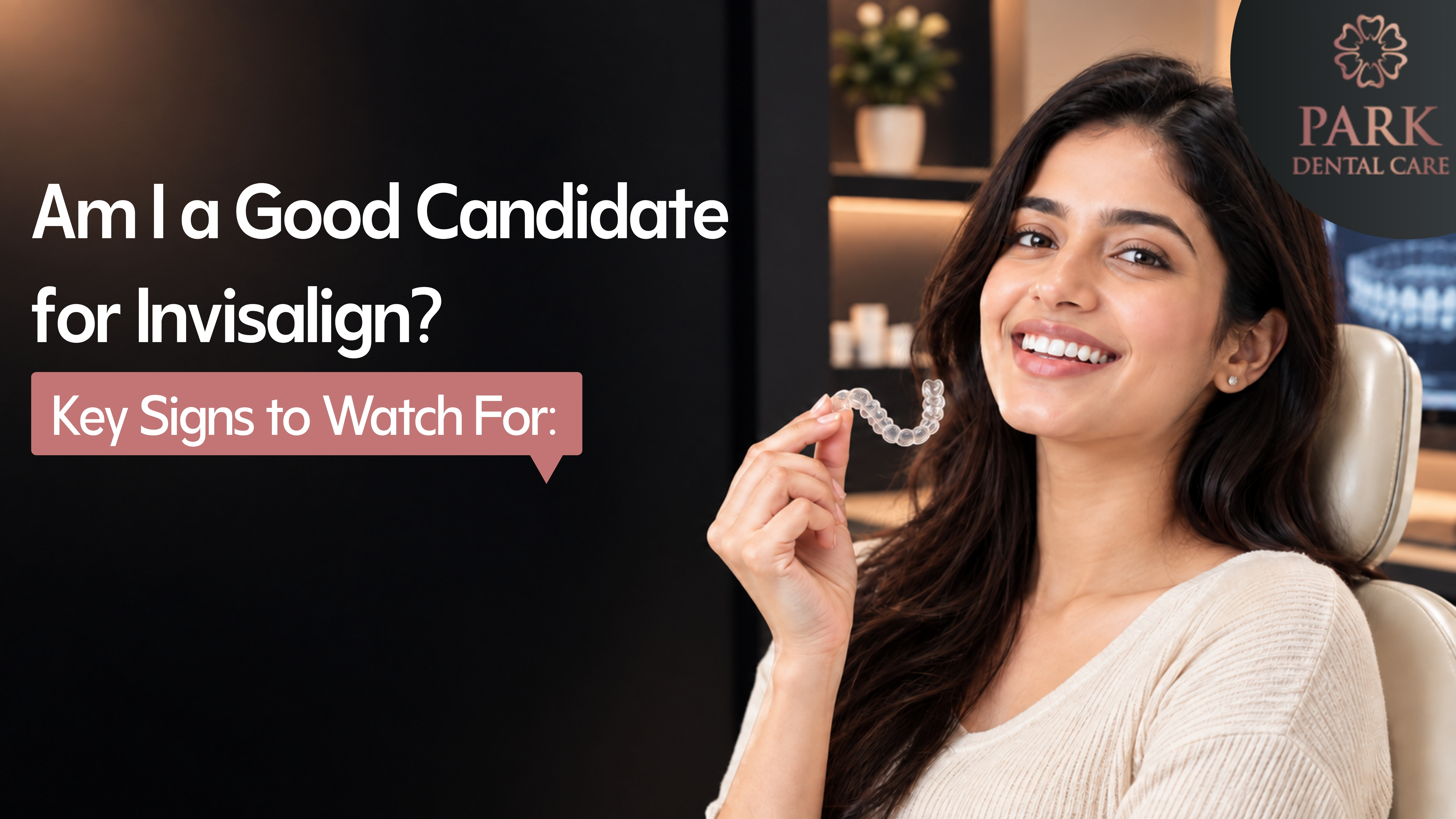
Am I a Good Candidate for Invisalign? Key Signs to Watch For – Park Dental Care
A straighter, healthier-looking smile can improve both confidence and oral function. Invisalign treatment in Hyderabad has become a popular orthodontic option for people who want to correct common teeth alignment problems without wearing traditional metal braces. Instead of brackets and wires, Invisalign uses a series of clear, removable aligners that gradually guide the teeth toward their planned positions.
However, Invisalign is not automatically suitable for everyone. The right treatment depends on the condition of the teeth, gums, bite, jaw relationship, and the patient's ability to follow the prescribed treatment schedule. At Park Dental Care, we evaluate these factors carefully before recommending clear aligner treatment.
So, how can we know whether Invisalign may be right for us? Here are the key signs and considerations to understand.
What Is Invisalign Treatment?
Invisalign is a form of clear aligner orthodontic treatment designed to gradually move teeth using a sequence of custom-made transparent aligners. Each aligner is designed to apply controlled pressure to specific teeth according to the treatment plan.
Unlike conventional braces, clear aligners can generally be removed while eating, drinking, brushing, and flossing. Patients typically move through a series of aligners according to the orthodontist's instructions.
The treatment can address several common orthodontic concerns, including:
- Crowded teeth
- Gaps between teeth
- Mild to moderate spacing problems
- Certain types of overbite
- Certain types of underbite
- Crossbite
- Crooked or rotated teeth
- Relapse after previous orthodontic treatment
The suitability of Invisalign depends on the specific dental and bite problem, rather than simply the patient's age.
1. You Have Mild to Moderate Teeth Crowding
One of the most common reasons people consider Invisalign is crowded or overlapping teeth. Crowding occurs when there is insufficient space in the dental arch for teeth to align properly. Crowded teeth can make brushing and flossing more difficult and may contribute to plaque accumulation around difficult-to-reach areas.
For suitable cases, Invisalign aligners can gradually create or utilize available space and guide teeth into improved alignment. During the consultation, we assess the degree and pattern of crowding to determine whether clear aligners can achieve the desired movement.
2. You Have Gaps Between Your Teeth
Gaps, also called dental spacing, can occur between two or more teeth. Some spaces are small and cosmetic, while others may be associated with the size or position of the teeth, jaw structure, or other dental factors.
In appropriate cases, Invisalign can gradually bring teeth closer together and improve overall alignment.
However, we do not treat every gap in exactly the same way. The cause of the spacing needs to be considered before developing a treatment plan.
3. You Have Certain Bite Problems
Invisalign is not limited to straightening visible teeth. Depending on the case, aligners may also be used to address certain bite issues.
These may include selected cases of overbite, underbite, crossbite, or other alignment concerns. The severity of the bite problem is important. Some mild or moderate bite concerns can be managed effectively with clear aligners, while more complex cases may require additional orthodontic approaches or alternative treatment options.
A professional assessment helps us determine the most appropriate approach for the individual patient.
4. Your Teeth and Gums Are Healthy
Healthy teeth and gums provide an important foundation for orthodontic treatment. Before starting Invisalign, we assess for issues such as tooth decay, gum inflammation, periodontal disease, and other oral health concerns. If these problems are present, they may need to be addressed before beginning active tooth movement.
Moving teeth while significant dental or gum problems remain untreated may create unnecessary complications. For this reason, maintaining good oral health throughout treatment is an essential part of successful orthodontic care.
5. You Are Comfortable Wearing Aligners Consistently
Invisalign is removable, which is one of its major advantages. However, removability also means that treatment depends significantly on patient compliance. We generally advise patients to wear their aligners for the amount of time recommended by their dental professional, commonly around 20 to 22 hours per day, unless instructed otherwise.
The aligners should primarily be removed for eating, drinking anything other than water, brushing, and flossing.
If we frequently leave the aligners out for extended periods, the teeth may not move according to the planned schedule. This can potentially prolong treatment. Therefore, being able to follow the prescribed wearing schedule is one of the most important signs that Invisalign may be a suitable option.
6. You Are Prepared to Maintain Good Oral Hygiene
Clear aligners require responsible oral hygiene habits. Before putting the aligners back in, we should clean our teeth properly. The aligners themselves also need to be cleaned according to the instructions provided by the dental professional.
Regular brushing, flossing, and dental check-ups remain important throughout orthodontic treatment.
Because aligners fit closely over the teeth, poor hygiene can allow plaque and bacteria to remain trapped against tooth surfaces for longer periods. Good daily care helps support healthy teeth and gums during treatment.
7. You Want a More Discreet Orthodontic Option
For adults and teenagers who are concerned about the appearance of traditional braces, Invisalign can provide a more discreet orthodontic option.
The aligners are made from transparent material and are designed to fit closely over the teeth. While they may still be visible at close range, they are generally less noticeable than conventional metal brackets and wires.
This can be particularly appealing to people who work in professional environments, attend college, interact with clients regularly, or simply prefer a less noticeable approach to orthodontic treatment.
8. You Are Ready to Attend Follow-Up Appointments
Invisalign treatment does not mean that professional monitoring is unnecessary. Regular appointments allow us to evaluate tooth movement, check oral health, review aligner progress, and make adjustments when necessary.
Depending on the treatment plan, patients may receive multiple sets of aligners and instructions about when to move to the next stage.
Keeping scheduled appointments helps us identify potential issues early and ensures that the treatment continues according to the planned progression.
Who May Not Be an Ideal Candidate for Invisalign?
While Invisalign is highly effective, it may not be suitable for everyone. Patients with:
- Severe tooth crowding
- Complex bite problems
- Significant jaw discrepancies
- Certain severely rotated teeth
- Untreated cavities or gum disease
- Poor commitment to wearing removable aligners
- Certain complex orthodontic conditions
At Park Dental Care, our orthodontists conduct a thorough evaluation to determine the best treatment plan for each patient.
What Are the Benefits of Invisalign?
For suitable candidates, Invisalign can offer several practical advantages:
1. Nearly Invisible Appearance: The clear design makes the aligners considerably less noticeable than traditional metal braces.
2. Removable Aligners: You can remove the aligners when eating and for routine brushing and flossing, according to your dentist's instructions.
3. No Traditional Brackets or Wires: The treatment does not use conventional metal brackets and archwires, which some patients find more comfortable or convenient.
4. Easier Cleaning: Because the aligners are removable, patients can brush and floss without having to clean around fixed brackets.
5. Fewer Dietary Restrictions: Since aligners are generally removed before eating, patients do not have the same type of food restrictions commonly associated with fixed braces.
However, these benefits do not mean Invisalign is automatically the right option. Treatment effectiveness depends on appropriate case selection and patient compliance.
Invisalign Treatment Process at Park Dental Care
If you are considering Invisalign treatment in Hyderabad, understanding the treatment journey can help you know what to expect.
Consultation & Evaluation: Your teeth, bite, gums, and overall oral health are carefully assessed to determine whether Invisalign is suitable for you.
Digital Scanning: Advanced 3D digital scanning creates an accurate model of your teeth for precise treatment planning.
Customized Aligners: A series of clear, custom-made aligners are created to gradually move your teeth into their planned positions.
Treatment Monitoring: Regular dental check-ups help monitor your progress and ensure the treatment is progressing as planned.
Retention Phase: After completing Invisalign treatment, retainers are recommended to help maintain your newly aligned smile and prevent unwanted tooth movement.
How Long Does Invisalign Treatment Take?
Treatment duration varies from one patient to another. It depends on factors such as the complexity of tooth movement, the patient's response to treatment, compliance with aligner wear, and the number of movements required.
Some straightforward cases may require only a relatively short treatment period, while more complex cases can take considerably longer.
Rather than relying on a fixed timeline, we determine an estimated duration after evaluating the patient's specific orthodontic needs.
Why Choose Park Dental Care for Invisalign Treatment in Hyderabad?
At Park Dental Care, we specialize in advanced orthodontic solutions, offering patients the highest standards of care.
- Certified Invisalign specialists
- Proven track record of successful cases
- Advanced 3D scanning and treatment planning
- Personalized care tailored to individual needs
- Convenient locations in Jubilee Hills and Kondapur
- Patient-centric approach with clear guidance and transparent costs